Episode 013: Bread and Judgement
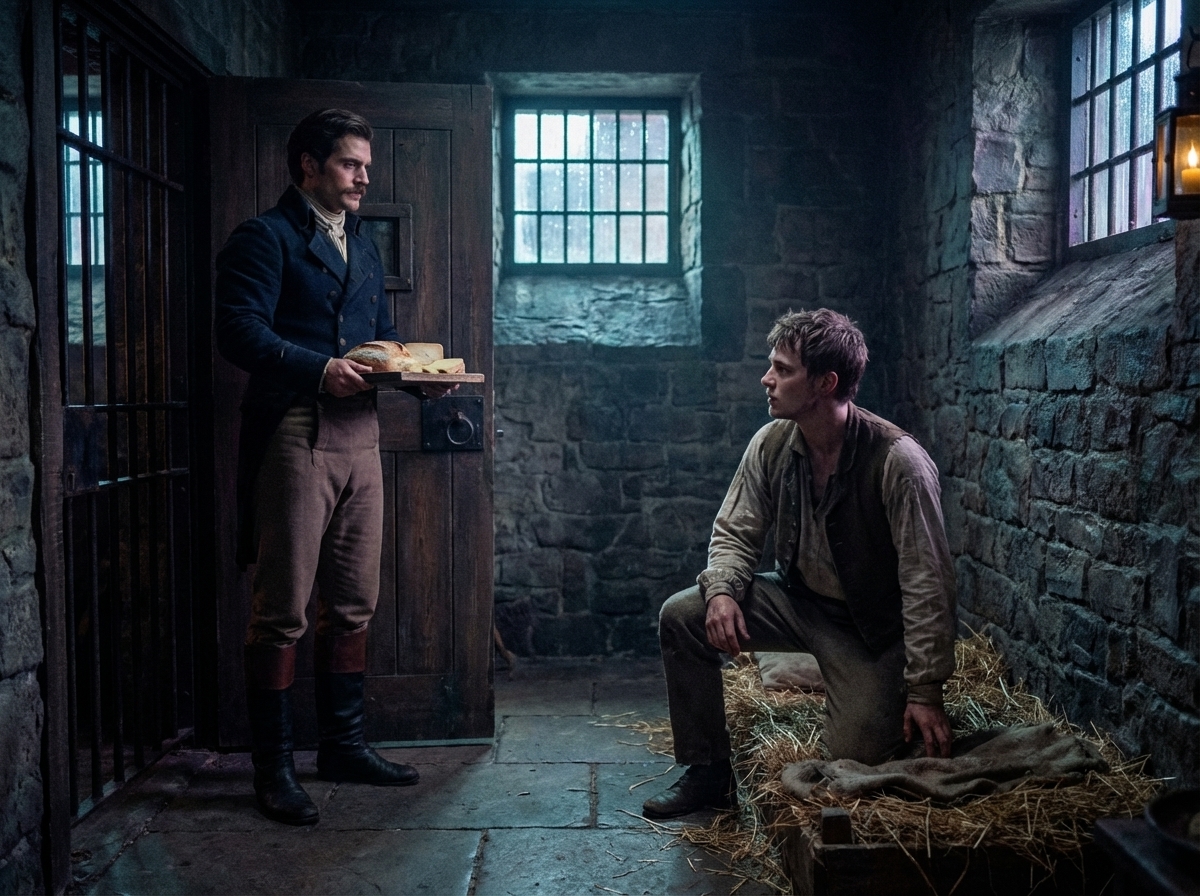
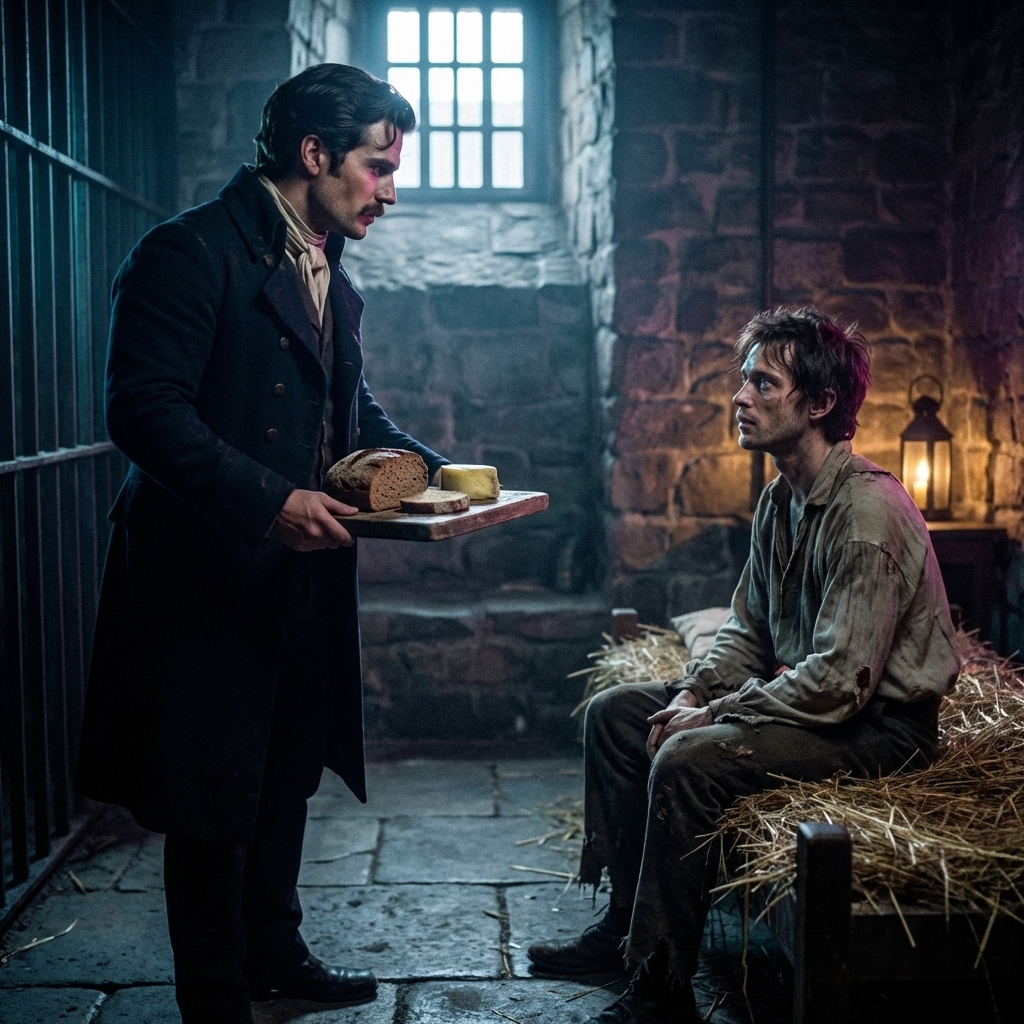
A gaoler walks into a cell carrying bread and cheese on a wooden tray. The bread is coarse and dark. The cheese has the dull waxen look of something kept too long in storage. It is, by any measure, a terrible breakfast. The man on the pallet is twenty-two years old. His name is William Jeffries. He is a clerk who has been in Portsmouth Gaol for two weeks, charged with theft by a merchant wealthy enough to make the accusation stick regardless of what actually happened. Today is his trial. By nightfall, the matter will be decided — freedom or transportation to the other side of the world. The gaoler sets the tray down and says: "Up with you, lad. Can't have you looking like a corpse on a slab when you stand before the judge." William's body responds before his mind gives permission. Mouth watering. Stomach clenching. The involuntary, humiliating hunger of a man who hasn't eaten properly in days, betraying him at the exact moment he wants to feel nothing. That's the moment. Not the trial. The breakfast before it.
Welcome to the Clivilius Storiverse Podcast. I'm Nathan. And this is where I pull back the curtain on individual moments within the Storiverse — the people, the decisions, the collisions between ordinary lives and extraordinary circumstances. Each episode, I take one moment, and I unpack what's really going on beneath the surface. The psychology. The relationships. The things people do when the rules they've lived by suddenly stop applying.
Today: a cell, a tray of bread, and the question of what dignity means when the system has already made up its mind.
WALKING INTO ROOMS WHERE THE VERDICT IS WRITTEN.
Here's what I want to talk about. Not the specifics of William's case — not the merchant, not the charge, not the courtroom. What I want to talk about is the experience of walking into a room where the outcome has already been decided, and what you do with the hours before you get there.
Because this isn't just an 1807 problem. This is the job interview where the position's already been filled. The meeting where the restructure has been signed off and you're there to be told, not consulted. The medical appointment where the doctor's expression tells you the answer before the results are on the table. The disciplinary hearing. The custody review. Any room where you walk in knowing that the people on the other side of the table have already reached their conclusion, and your presence is a formality the system requires in order to call itself fair.
William knows. He says as much: "The verdict's as good as written." A wealthy merchant's word against a clerk's — and the merchant's influence reaches into the courts themselves. The system isn't broken. The system is working exactly as designed, and it is designed for people who have money and connections, and William has neither.
So the question isn't whether he can change the outcome. He can't. The question is what he does with the hours between this cell and that courtroom. How he uses the time. What he puts into his body. What he puts on his face. What version of himself he carries through the door.
And that question — the question of preparation for an event you can't control — is what this morning is actually about.
THE BODY'S BETRAYAL.
William doesn't want to eat. He has no appetite. His stomach had "scorned the stale crust" earlier. His mind is occupied with dread, with bitterness, with the mathematics of injustice. The last thing he wants is to sit on a straw pallet in a freezing cell and chew stale bread.
His body disagrees. The smell of bread and cheese reaches him and something primal overrides everything his mind has decided. Hunger. Real, physical, undeniable hunger. The kind that doesn't care about your emotional state. The kind that operates on a completely different timeline from grief or fear or outrage.
I think this is one of the most universal and least discussed human experiences: the moment when your body breaks ranks with your crisis. You're in the worst situation of your life and your stomach growls. Someone puts food in front of you and your hand moves toward it. You haven't slept, your world is falling apart, and you catch yourself wanting coffee, wanting toast, wanting the simple, stupid comfort of something warm in your hands.
It feels like betrayal. William experiences it as exactly that. His body declaring its own priorities, reminding him that whatever the court decides today, the organism he inhabits will continue to demand fuel. Hunger doesn't understand courtrooms. It doesn't understand injustice. It understands bread.
But here's the thing William doesn't see yet: the betrayal is also a gift. Because the body that demands breakfast is the same body that will have to stand upright in a courtroom in a few hours. And standing requires fuel. The hunger his mind resents is the body's way of saying I'm still here, I still need to function, and whatever happens next I intend to be present for it.
CARE INSIDE SYSTEMS THAT DON'T ALLOW IT.
The gaoler, Culpepper, is not a kind man. Not in the way that word usually gets used. He is a former marine sergeant, fifty years old, fifteen years in the gaol. His face is carved in lines of habit and fatigue. His coat, once a proud blue, has been polished to a shine at the elbows by years of wear. He carries himself with the efficiency of someone whose every gesture has been worn smooth by repetition.
He is part of the system. The keys at his hip are the system's jewellery. The cell door he opens and closes is the system's mouth. He exists to move bodies from cells to courtrooms and from courtrooms to ships, and the system does not pay him to care about what happens to those bodies in between.
And yet.
The bread is fresher than it should be. William notices — the crust cracks more easily than its appearance suggests, an "unexpected mercy" in a world where mercies are scarce. He wonders, without voicing it, whether Culpepper has bought this bread with his own money. Whether this half-loaf represents not the gaol's ration but one man's quiet, unacknowledged decision to make another man's last meal before trial slightly less terrible than it had to be.
This is how care works inside institutions that aren't designed for it. It doesn't announce itself. It doesn't ask to be thanked. It arrives disguised as routine — a tray set down, a gruff instruction to eat, a cup of water that tastes of rust and pipes but arrives in a hand that could have let the prisoner go thirsty. The official version is: the system feeds its prisoners. The unofficial version — the one neither man acknowledges — is that a fifty-year-old gaoler chose to spend his own coin on a twenty-two-year-old clerk because something in him refused to send the boy to his trial on stale crusts.
Everyone has met a Culpepper. The teacher who stayed late. The nurse who sat with you five minutes longer than the chart required. The bureaucrat who quietly overlooked a technicality because enforcing it would have destroyed someone's application. People embedded in systems that constrain compassion, who find the cracks in the structure and pass small kindnesses through them. Never enough to change the system. Always enough to change the morning.
THE COUNSEL.
Culpepper tells William two things. The first is practical: "The courtroom'll be full. People've been talking of nothing else for days." A clerk accused of theft by the most powerful merchant in Portsmouth — it's theatre, and the city wants its spectacle.
The second is something else entirely. It comes after William's bitterness has spilled over, after he's named the rigged scales and the merchant's influence and the futility of truth when the other side has money. Culpepper listens to all of it without arguing. And then he says:
"A man's dignity is his own, no matter what chains they put on him."
And then, quieter: "Seven years is a long time, but not so long that a man can't return with his head held high."
I want to unpack what Culpepper is actually doing here, because it's subtle and it's important. He is not offering hope. He is not saying the system will be fair or the outcome will be just. He has been in this gaol for fifteen years. He has watched hundreds of men walk into courtrooms. He knows exactly how this ends.
What he's offering instead is a strategy for surviving it. Not the verdict — the verdict is coming regardless. He's offering a strategy for surviving the experience of being judged by people who've already decided. And the strategy is: don't give them your posture.
There is a thing that happens in the body when a person accepts defeat before the defeat has formally arrived. The shoulders drop. The eyes lower. The spine curves. It's visible. Everyone in the room can see it. And what it communicates — to the judge, to the gallery, to the merchant sitting in the front row — is that the accused has already agreed with the accusation. The body has signed the confession before the mouth has spoken.
Culpepper is saying: don't let that happen. Walk in upright. Look forward. Let them see a man who knows he's been wronged and refuses to perform the shame they expect from him. The verdict might already be written. But the story of how William Jeffries received that verdict — whether he crumbled or stood — that's still being authored. And he's the only one holding the pen.
THE DECISION TO STAND.
Culpepper leaves. The door groans shut. And William is alone with broken bread, a tolling bell, and the grey light of an April morning creeping across the flagstones.
He sits with Culpepper's words. They find a chord he thought had been dulled by fear — something faint, like the echo of a church bell carried on the wind. Not hope. Not defiance. Something between the two. A flicker. The first spark coaxed from flint.
They might strip him of freedom. They might clap irons on his wrists and ship him to the world's far edge. But dignity, Culpepper said, is his to yield or his to keep. No gaoler's key nor magistrate's word can claim it unless he places it in their hand.
And here's where the power lies — not in the political injustice or the rigged court or the merchant's influence. It lies in the smallness of the decision William makes in this cell, alone, in the minutes before he's collected.
He decides to stand upright.
That's it. That's the entire revolution. Not a speech. Not an escape. Not a dramatic reversal. Just a twenty-two-year-old man on a straw pallet deciding that when they come for him, he will put his bare feet on the cold flagstones and rise. He will walk into the courtroom with his chin up and his shoulders square. He will not perform the defeat they expect. He will not give the gallery its spectacle of shame.
The bread is broken on the tray. The cheese is barely touched. Whatever hunger he felt has been replaced by something else — something small and uncertain but alive. Stubborn in its refusal to be extinguished.
The boy from Portsmouth, the clerk trusted with ledgers, the dutiful son who knelt at his mother's hearth — that version of William is already gone. He was gone the moment the gaol door closed two weeks ago. The only question left is who takes his place. And this morning, in a cell in Portsmouth, with the taste of coarse bread and rust-flavoured water still in his mouth and a bell tolling somewhere beyond the walls, William Jeffries decides.
Not innocent. The court doesn't care about innocent. Not hopeful. Hope is a luxury for people with power. Not angry — anger is a fire that burns the person holding it when there's no one close enough to feel the heat.
Upright. That's what he decides. Upright is what the bread bought him. Upright is what Culpepper's counsel gave him. Upright is the only thing in this cell that belongs to him and can't be taken without his permission.
And it has to be enough. Because it's everything he has.
AND FINALLY.
Next time on the Clivilius Storiverse Podcast, we step into a different life, a different moment, a different corner of this world. That's how this works — every episode is a window into a single moment and the ripples it sends through the lives around it.
I'm Nathan. Thanks for listening. And the next time you walk into a room where the outcome's already been decided — remember what a Portsmouth gaoler told a boy two hundred years ago. The verdict might not be yours. But the way you carry yourself into it always is.