Episode 002: Welcome Distractions
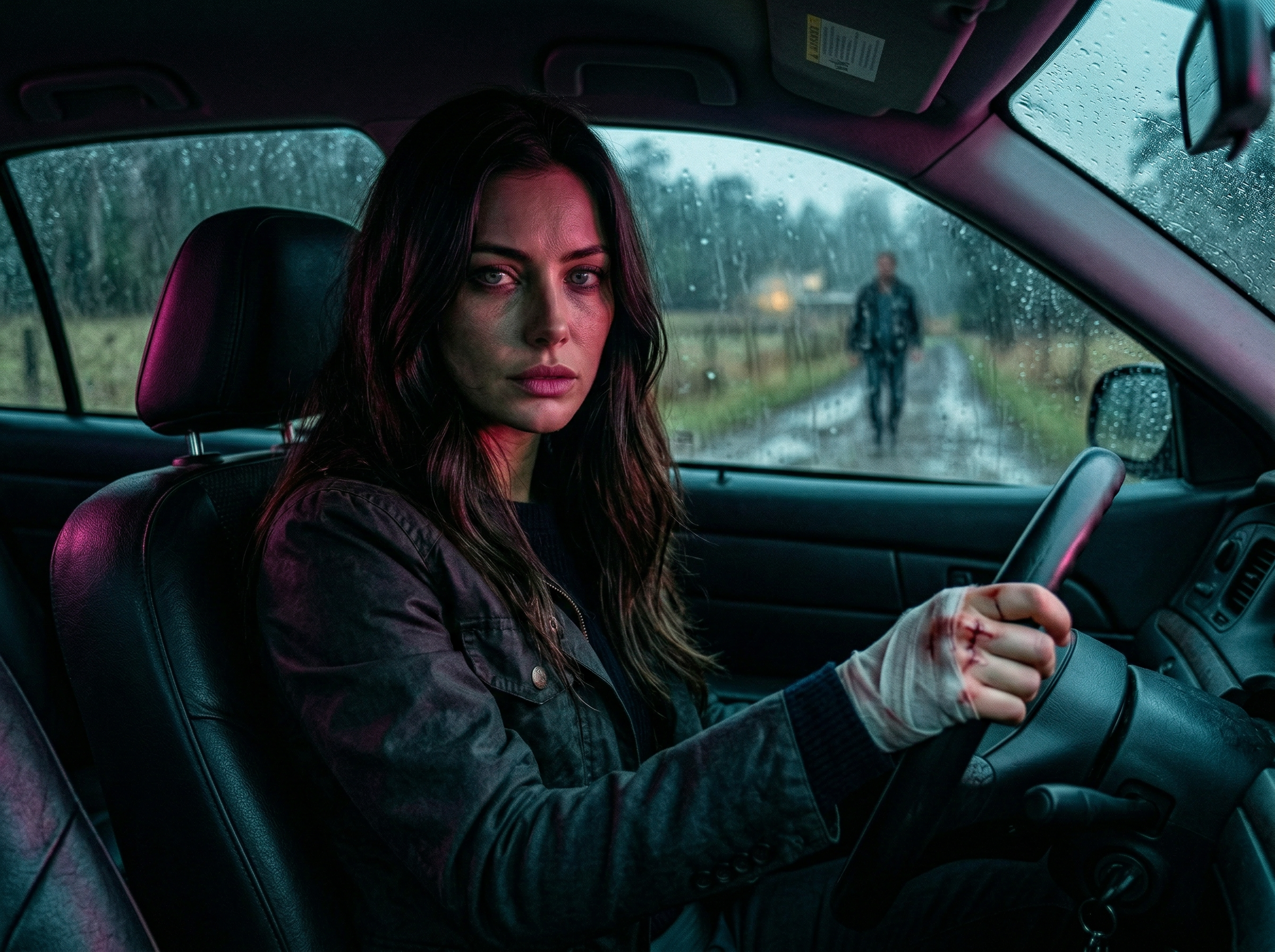
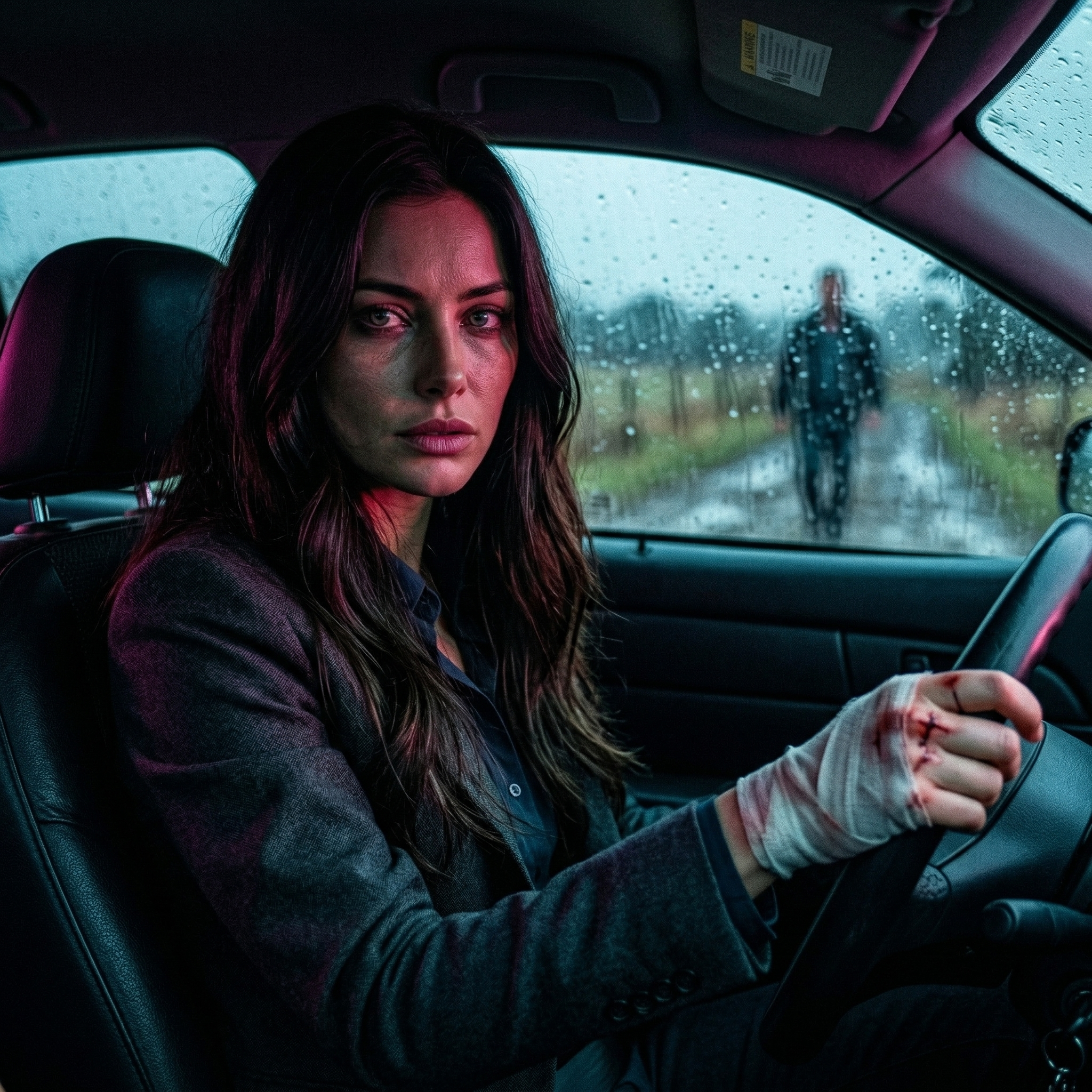
She's sitting in the driver's seat of an unmarked police car. She's soaked through. Her stitches have torn — she can see the red spreading through the bandage on her hand. Her head is pounding so hard she can barely see straight. And she's trying very, very hard not to notice how her partner's wet clothes cling to his body. That's the moment. Not the blood evidence she's just called in. Not the missing couple whose property they've been searching. Not the dead goose — and yes, there's a dead goose, we'll get to that. The moment is a twenty-nine-year-old detective sitting in the rain, injured and furious, watching a man she has every right to hate walk back towards the car, and feeling something she doesn't want to feel. That's what I want to talk about today.
Welcome to the Clivilius Storiverse Podcast. I'm Nathan. And this is where I pull back the curtain on individual moments within the Storiverse — the people, the decisions, the collisions between ordinary lives and extraordinary circumstances. Each episode, I take one moment, and I unpack what's really going on beneath the surface. The psychology. The relationships. The things people do when the rules they've lived by suddenly stop applying.
Today: a detective called Sarah Lahey, a missing couple in rural Tasmania, and the radio call that saved her from herself.
DETECTIVE LAHEY.
Sarah Jane Lahey is twenty-nine years old and she will be dead within nine days.
I need to say that upfront, because it changes the way you hear everything that follows. Every small complaint about her headache, every moment of frustration with her partner, every flash of self-awareness buried under professional bravado — it all sounds different when you know there's a clock running that she can't see.
But Sarah doesn't know that. On July 30th, 2018, Sarah Lahey is a detective with Tasmania Police's Criminal Investigation Branch, and she is having an extraordinarily bad day.
She's Hobart born. Orphaned young. Raised by a grandmother. She became a cop because she needed structure, needed purpose, needed something that would let her channel the relentless, almost obsessive need to understand things that has driven her since childhood. And she's good at it. Genuinely, exceptionally good. The kind of detective who sees connections others miss, who won't let a thread go, who will drive herself into the ground before she'll walk away from a case.
The problem is Karl Jenkins. Her partner. And the word "partner" is doing a lot of heavy lifting here, because what Karl is to Sarah sits in a space that neither of them has ever managed to define cleanly. Professionally, they work. They have a rhythm, a shorthand, the kind of instinctive coordination that only develops between people who've spent serious time in the field together. Personally, it's a disaster. There's history between them — attraction, conflict, violence, unresolved tension that neither of them has the emotional vocabulary to address.
And right now, today, in this moment, Sarah is furious with him. Justifiably so. Something happened yesterday that fractured whatever fragile equilibrium they'd maintained, and she hasn't forgiven him, and she doesn't intend to.
Which makes it profoundly inconvenient that she can't stop looking at him.
THE OWENS PROPERTY.
To understand what Sarah's doing sitting in a car in the rain with torn stitches, you need to know about Karen and Chris Owen.
The Owens are — or were — a couple living in Collinsvale, which is a small rural community in the foothills of kunanyi, about twenty-five kilometres northwest of Hobart. Apple orchards, winding roads, the kind of place where everyone knows everyone and nothing much happens. Until three days ago, when Karen and Chris Owen disappeared.
Nobody knows where they went. Their house — a colonial-era cottage they'd renovated with meticulous environmental consciousness — sits empty. And when Sarah and Karl arrived to investigate, they found blood.
That's the professional picture. Blood in the house, a missing couple, a property that's yielding more questions than answers. Sarah's been searching the grounds, getting progressively more injured in the process — she's concussed, her hand is torn open, and at one point she shot a goose. That last detail sounds absurd, and it is, but it's also Sarah's day in miniature: every attempt to do her job competently keeps colliding with something ridiculous or painful or both.
By the time she gets back to the car, she's exhausted, bleeding, and running on nothing but professional muscle memory. She picks up the dispatch radio and calls in forensics for the blood evidence. Her voice is steady. Her hands are shaking. The gap between how she sounds and how she feels is enormous.
THE BODY BETRAYS.
This is where the moment gets complicated. Because once the call is made, once the professional task is done, Sarah has nothing to do but wait. And Karl is walking back to the car.
In Sarah's own account of this moment, she's brutally honest about what happens next. She watches him approach through the rain-streaked windscreen, and she notices things she doesn't want to notice. The way his wet trousers cling to his legs. The way his shirt moulds to his arms. Physical details that her conscious mind is screaming at her to ignore, because she's angry with him, because he hurt her, because finding him attractive feels like a betrayal of her own justified rage.
And what's devastating about this is the self-awareness. Sarah isn't oblivious. She knows exactly what's happening. She names it, in her own account, with unflinching precision: anger and attraction, resentment and residual affection, professional respect and personal hurt, all tangled together in ways she can't separate. She turns her head away. She forces her gaze elsewhere. She tells herself to focus on the job.
But the body doesn't listen to instructions. That's the thing Sarah keeps running up against, over and over. She can will herself to be professional. She can discipline her voice, control her expression, maintain the outward appearance of competence. But she can't stop her eyes from tracking him across the car park. She can't stop the involuntary response to a man she's drawn to despite every rational reason not to be.
This is what I find so striking about Sarah's account — not the attraction itself, which is ordinary enough, but the layers of self-recrimination wrapped around it. She's not just noticing Karl. She's noticing herself noticing Karl, and judging herself for it, and then trying to override the judgement with professionalism, and then failing, and then judging herself for the failure. It's an exhausting internal loop, and she's running it while concussed, bleeding, and sitting in a puddle of her own rainwater.
THE RADIO.
And then the radio saves her.
A dispatch call comes through. Speeding incident near Collinsvale. Apparent drag race. Available units respond.
And something happens inside Sarah that you can almost feel through her account. The fog lifts. The pain drops to the background. The tangled mess of attraction and anger and self-recrimination gets shoved into a drawer and the drawer gets slammed shut. Because this she knows how to do. A pursuit. A clear objective. Protocols. Action. Something that doesn't require her to navigate the emotional wreckage of her partnership with Karl.
She grabs the radio. Her injured hand protests the grip but she doesn't care. "CITY632, we've got this."
And there it is. Five words, and Sarah Lahey is back. Not healed, not resolved, not fixed — but functioning. Pointed at something she can chase instead of something she can't escape.
What happens next is genuinely thrilling — two cars scream past the Owens' property, Karl's driving instincts kick in, the patrol car goes airborne over a rise in the road, Sarah catches a number plate through torrential rain — but that's a different moment. What matters here, in this one, is the pivot. The exact second when the radio crackled and Sarah stopped being a woman trapped in a car with her feelings and became a detective with somewhere to go.
WHAT THE DISTRACTION TELLS US.
The title of this moment in Sarah's account is "Welcome Distractions." And I keep turning that phrase over, because it's doing more work than it seems.
A distraction is, by definition, something that pulls you away from where your attention should be. So when Sarah calls the dispatch call a "welcome distraction," the question becomes: a distraction from what? From the investigation? From Karl? From herself?
The answer is all three, and that's what makes it so human. Sarah Lahey is a brilliant detective who cannot, in this moment, do the one thing the job actually requires — sit still and wait. Because sitting still means being alone with her thoughts, and her thoughts are full of a man she's furious with and attracted to and frightened of and dependent on, all at once.
The drag race call isn't just convenient. It's medicine. It replaces emotional complexity with operational clarity. It gives her a version of herself she can live with: the competent detective, the quick responder, the professional who says "we've got this" with a steady voice and means it.
But here's the thing that sits underneath all of that, the thing that Sarah herself doesn't acknowledge. She's choosing adrenaline over introspection. She's choosing pursuit over processing. And that pattern — reaching for the next crisis instead of sitting with the current one — is a thread that runs through everything Sarah does. It's what makes her exceptional at her job. And it's what makes her vulnerable in ways she can't see.
Nine days from now, Sarah Lahey will be dead. She doesn't know that yet. Right now, she's chasing cars through the rain in Collinsvale, and for a few minutes, that's enough. The pursuit is enough. The clarity is enough. The welcome distraction is doing exactly what she needs it to do.
It's just not doing what she actually needs.
AND FINALLY.
Next time on the Clivilius Storiverse Podcast, we step into a different life, a different moment, a different corner of this world. That's how this works — every episode is a window into a single moment and the ripples it sends through the lives around it.
I'm Nathan. Thanks for listening. And if you've ever seized a distraction to avoid sitting with something harder — you already know exactly who Sarah Lahey is.