Episode 010: The Dog That Waited
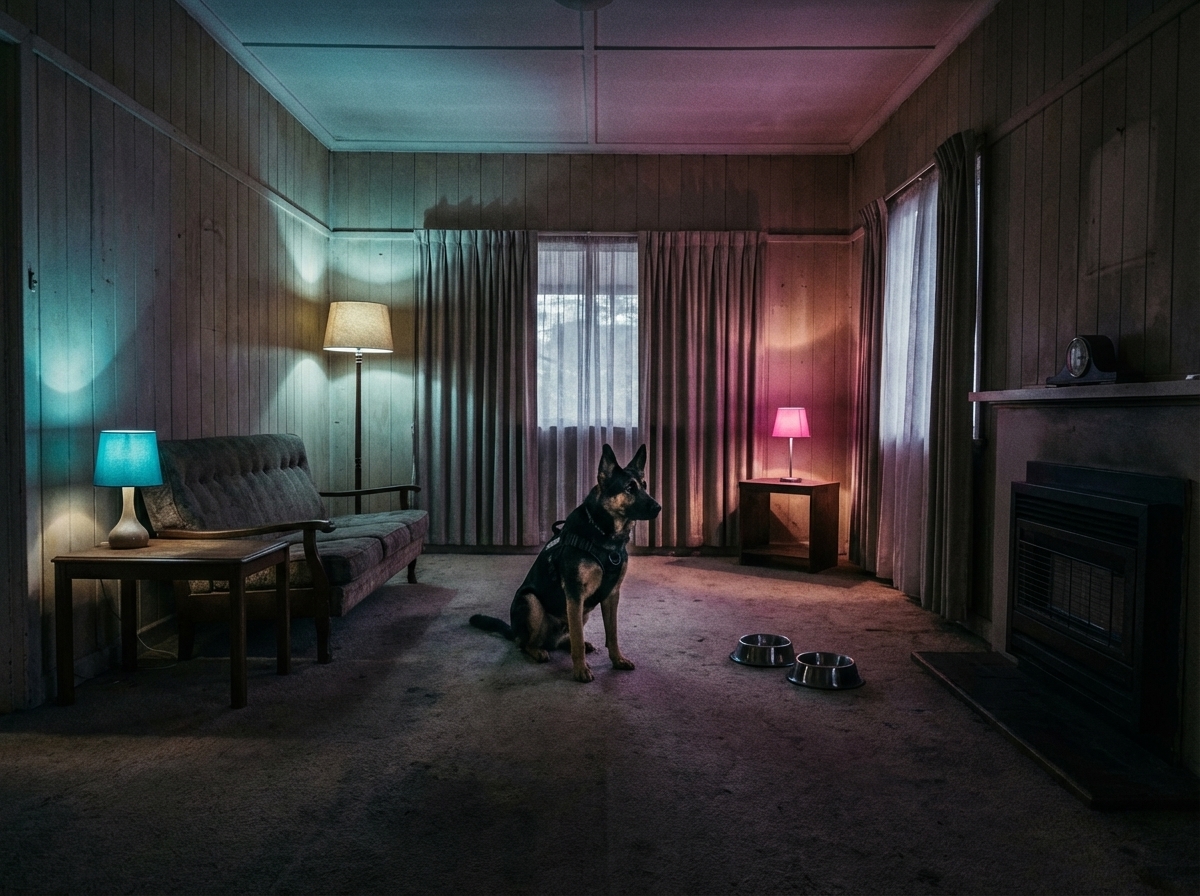
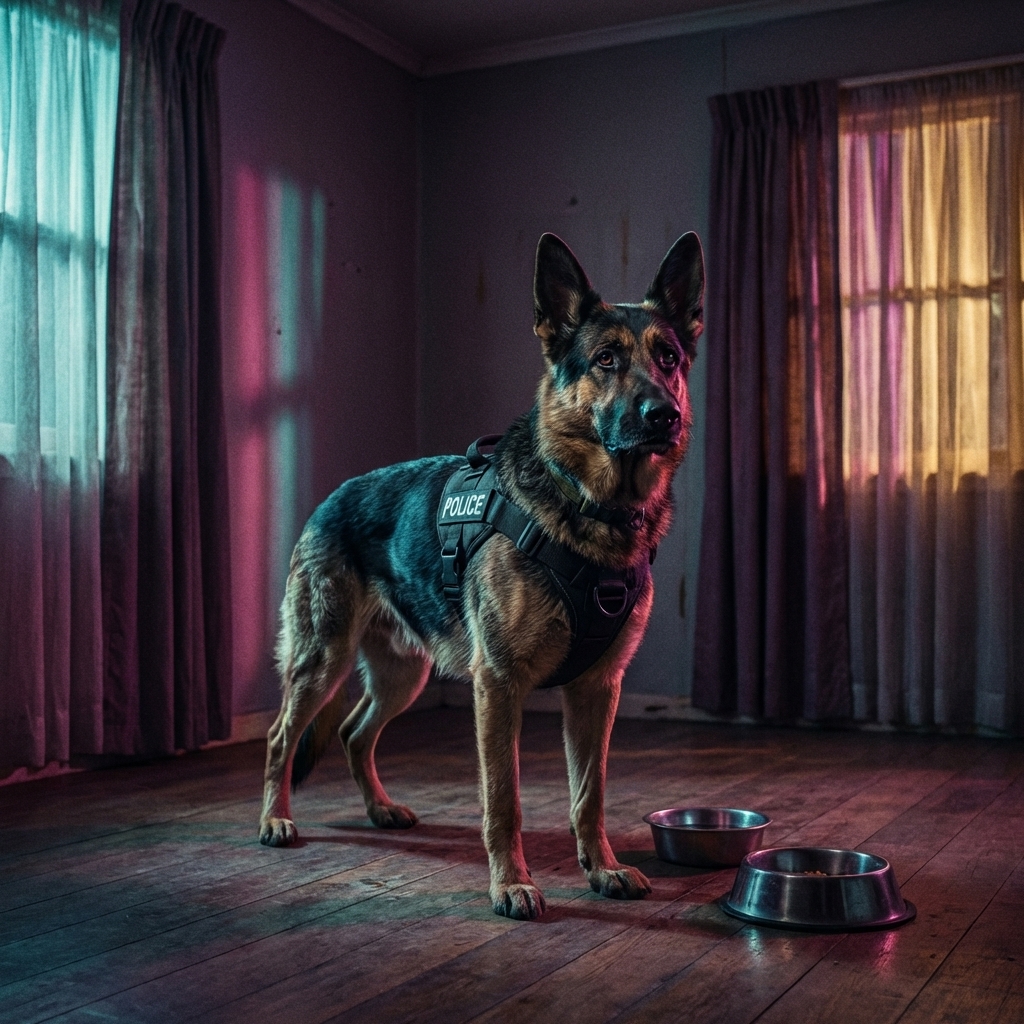
Behind a locked door in South Hobart, a German Shepherd has been standing guard for three days. His water bowl is dry. His food bowl has been licked to a shine. Nobody has spoken to him, touched him, or opened the door since the morning his handler walked out and didn't come back. He's still at his post. That's the moment.
Welcome to the Clivilius Storiverse Podcast. I'm Nathan. And this is where I pull back the curtain on individual moments within the Storiverse — the people, the decisions, the collisions between ordinary lives and extraordinary circumstances. Each episode, I take one moment, and I unpack what's really going on beneath the surface. The psychology. The relationships. The things people do when the rules they've lived by suddenly stop applying.
Today: a German Shepherd, a locked house, and the difference between loyalty and faith.
THE CONTRACT.
I want to talk about what it means when a dog waits.
Not in the sentimental way — not the YouTube video, not the heartwarming rescue story, not the dog-at-the-airport reunion. I mean the actual mechanics of what's happening inside an animal that has been trained to hold a position and whose handler has stopped coming home.
Jargus-9B is a police dog. German Shepherd, born October 2015, Rokeby breeding programme. Paired with Senior Detective Karl Jenkins in November 2017. Nine months together. In dog time, that's a lifetime of established routine — a vocabulary of commands, a map of shared territory, a daily rhythm so precise that Karl wrote a six-page care protocol to document it.
Fed at the same time every day. Walked every evening through the same streets. The contract between a handler and his K9 partner is not sentimental. It's structural. The dog protects the handler. The handler provides food, shelter, exercise, purpose. Neither party negotiates. Neither party forgets. The contract is maintained through repetition until it becomes the architecture of both lives.
On the morning of August the second, Karl Jenkins walked out the front door. The door closed behind him. And the contract, from Karl's side, stopped being honoured.
Jargus didn't know that. Dogs don't receive memos. They don't get a notification that says "your handler has entered the grounds of Jeffries Manor and hasn't come out." What Jargus knew was this: feeding time arrived and nobody fed him. Walk time arrived and nobody walked him. Night came and nobody came home. Morning came and the bowl was still empty and the door was still closed and the silence in the house was a kind he'd never experienced — not the silence of Karl sleeping, or Karl working, or Karl in another room. The silence of Karl not being anywhere at all.
HOLDING THE POST.
Here's the thing about trained dogs that most people don't think about. A pet will panic. A pet will scratch at doors, bark itself hoarse, destroy furniture, spiral into distress behaviour that's visible and immediate and unmistakably an expression of something is wrong and I can't cope with it.
A trained police dog does something different. He holds his post.
Three days. Think about what that means in physical terms. No water — the bowl went dry at some point on the first day, maybe the second. No food. No relief from the house, which is sealed shut, curtains drawn, the air growing stale and close. The cold creeping in through the floorboards as winter nights drop the temperature and nobody turns on the heat.
And Jargus doesn't scratch the door. Doesn't destroy the furniture. Doesn't panic. He stands in the living room — the room where he's spent nine months of evenings lying at Karl's feet while Karl worked — and he maintains his position. Not because he's brave. Not because he's loyal in the way that word gets used in greeting card language. Because his training tells him that this is what you do when your handler is absent. You hold the space. You guard the territory. You wait.
The problem with training this effective is that it doesn't have an off switch. It doesn't contain a clause that says "after seventy-two hours, stop waiting." The training says hold and the dog holds and the hours pass and the water runs out and the body begins to consume itself and the dog keeps holding because the only authority that can release him from the post is the voice of the man who put him there.
That's not loyalty. That's faith. And the difference matters.
THE GROWL.
When the locksmith starts working the deadbolt, Jargus growls.
From the other side of the door, six police officers hear it. And the K9 handler among them — a woman named Meg Hartley — hears something specific in its frequency that the others might miss.
A territorial growl from a healthy, confident dog is steady. It's a declaration: this is mine, stay out. The growl through Karl's front door isn't that. It has a tremor in it. A vibration running underneath the warning that speaks of an animal operating past its reserves. Hungry, dehydrated, exhausted — and still growling. Still enforcing the contract. Still performing the last function his handler assigned him, which is to be here, in this house, protecting what belongs to Karl Jenkins.
Hartley speaks through the door. She uses the tonal register that K9 training builds into every handler's voice — firm, clear, structured. The language of the world Jargus was built for. And the growl wavers. Not because Jargus trusts her. Because she speaks the language of a system that his handler also belonged to. She's not Karl. But she's from Karl's world.
There's something worth sitting with here. The difference between trusting a person and trusting a system. Jargus doesn't know Meg Hartley. Has never seen her, smelled her, heard her voice. But her tone carries the cadence of command, and command is the framework within which Jargus's entire life operates. When the door opens and she steps through, she's not entering as a stranger. She's entering as a representative of the structure that Karl belonged to. And that's enough — barely, just enough — to create a crack in the fortification.
THE SURRENDER.
The door opens. Hartley steps inside. And Jargus is standing in the centre of the living room.
His coat has lost its sheen. His legs are braced but trembling — the rigidity of a body running on nothing but the last fumes of discipline. His ears are flat. And his eyes are looking past Hartley. Through the open door. Searching the space behind her for someone who isn't there.
That detail. The eyes looking past the person who's actually present, searching for the one who matters. If you've ever collected someone else's child from school, or house-sat for a friend whose dog doesn't know you, or arrived at a hospital room where the patient was expecting someone else — you know that look. The brief, involuntary scan. The flicker of hope followed by the recalibration. You're not the one I'm waiting for.
Hartley crouches. Opens a container of food. The smell reaches Jargus instantly — and you can see the war playing out in his body. Hunger pulling one way. Training pulling the other. Hold your ground. Protect this space. Wait for the one who matters.
A whine breaks through the growl. High, involuntary. The sound that escapes when discipline can't quite hold against what the body needs. Not a decision — a collapse. The moment when the structure gives way, when the post can no longer be held, when three days of obedience to a contract nobody is honouring finally exceeds what muscle and will can sustain.
Jargus walks to Hartley. Not with the fluid confidence of a trained K9 responding to a handler. With the stiff, slow gait of an animal surrendering something. He reaches the food and eats, and the sound fills the quiet house — desperate, gulping, the sound of genuine hunger — and it's the sound of a contract being broken not by betrayal but by biology.
THE LEAN.
After the food is gone, Hartley takes Jargus to the garden. She fills a water bowl. He drinks for a long time. Then she sits cross-legged on the grass and he lies down beside her with his head against her knee.
Not moving. Not exploring. Not performing any behaviour that could be called active. Just lying there, accepting the contact. His eyes are half-closed. His body, for the first time in three days, is not braced for anything.
I want to talk about what that lean means. Because it's not affection — not yet, not in the way we'd use the word. It's something more primal. An animal that has been alone for three days, operating on nothing but training and the memory of routine, has found a body to press against. The specifics don't matter. Hartley isn't Karl. But she's warm and she's present and she speaks the right language, and the lean is what happens when an animal that's been running on alertness alone finally encounters something it can stop being alert for.
Humans do this too. After a crisis — a funeral, a hospital stay, a disaster — there's often a moment where someone collapses into the nearest available person. Not the right person. Not the person they'd choose. Just the person who's there. The lean isn't about who. It's about the body's desperate need to stop holding itself up.
THE REAR WINDOW.
At the end of the morning, Hartley brings Jargus out the front door. He stops on the step. The newspapers are still there — three days of uncollected news, stiff with frost. He stands there and his nose works the air. The cold. The eucalyptus from the bush up the hill. The exhaust from the idling vehicles. Dozens of unfamiliar scents. And somewhere beneath all of it, perhaps, the ghost of the one scent that matters — the one that walked down this path three days ago and turned left toward the street and didn't come back.
He walks to Hartley's vehicle. Steps into the rear compartment without resistance. Turns once, settling himself on the padded floor, and faces the rear window.
Through the glass, the house is still visible. The drawn curtains. The cream weatherboards. The front door, standing open for the first time in three days, revealing nothing but a dim entryway and a pair of shoes lined against the wall where Karl left them.
Hartley closes the compartment. The latch clicks. The vehicle pulls away. And through the rear window, Jargus watches Pillinger Street grow smaller and smaller until the car turns the corner at the bottom of the road and the house disappears.
There's no way to know what a dog understands about leaving. Whether the departure from the house registers as temporary or permanent. Whether the rear window is a way of holding on or a way of letting go. We project onto animals because we can't do anything else — we see the backward look and we call it grief or devotion or hope, because those are the words we have and the dog doesn't have any.
But what I know is this. Jargus held his post for three days. He growled at strangers through a locked door. He refused food until his body wouldn't let him refuse anymore. And when the car pulled away, he turned to face the window and watched the house until he couldn't see it.
Nine months of perfect routine. Then nothing. Dogs don't forget their handlers. And handlers — the good ones, the ones who write six-page care protocols and walk the same streets every evening — don't forget their dogs.
Whatever happened to Karl Jenkins, the dog already knew the answer before anyone opened the door. The water bowl was dry. The food bowl was empty. And the man who never missed a feeding had missed three days of them.
The investigation will find evidence. It will process fingerprints and bag notebooks and photograph walls. But the most important thing it finds — the thing that tells the truth about what happened before any forensic result comes back — is a German Shepherd standing in the middle of a living room, trembling, holding a post that nobody was coming to relieve.
AND FINALLY.
Next time on the Clivilius Storiverse Podcast, we step into a different life, a different moment, a different corner of this world. That's how this works — every episode is a window into a single moment and the ripples it sends through the lives around it.
I'm Nathan. Thanks for listening. And if you've ever come home to a dog who'd been waiting too long — you know that the joy in their eyes is also a question they can't ask.