Episode 014: You Hide the River Inside the Flood
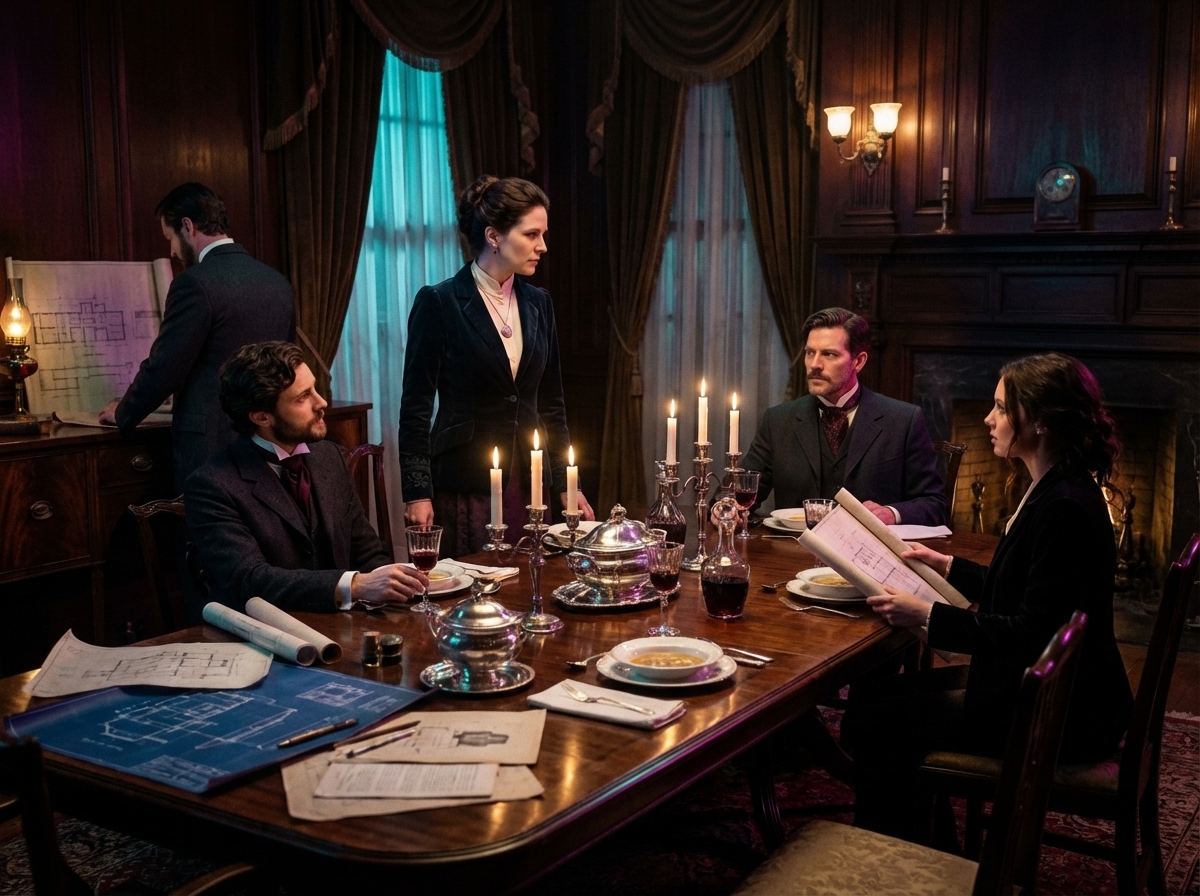
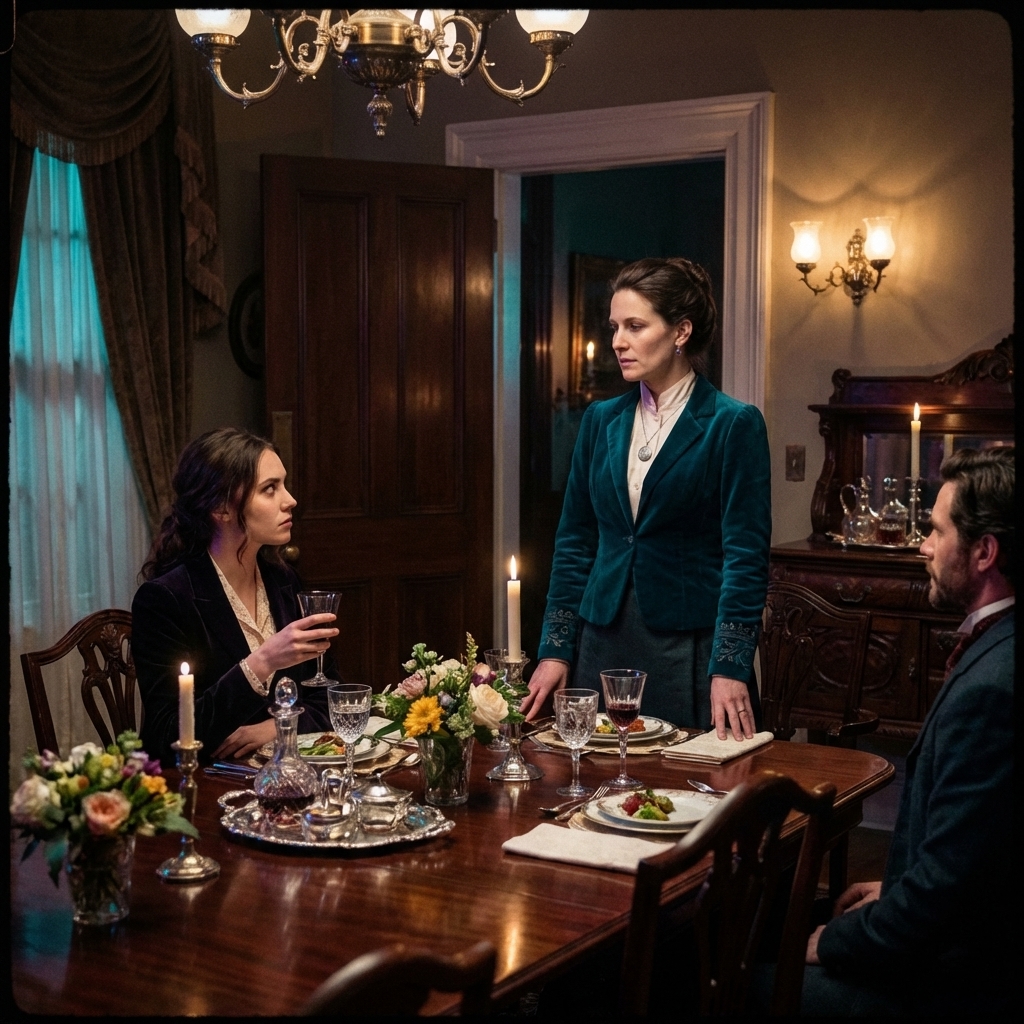
A woman walks into a dining room in Boston in the summer of 1873 and reads every person in it before the host has crossed the room to greet her. The architect: confident, wary, his respect demonstrated rather than given. She moves past him. The engineer: wrong. The files said capable and conservative. What's sitting in that chair is something the files didn't prepare her for — a man occupying his exact ground with such completeness that the quality of his attention feels almost physical across the room. She revises him considerably upward. The designer: still looking at her. Two people reading each other simultaneously, neither dropping the gaze, neither softening it into courtesy. She files this as the most consequential thing the evening has yet produced. A dinner table, Miriam Ashcroft says, is a remarkably efficient instrument. In three hours it tells you everything a year of correspondence cannot. That's the moment.
Welcome to the Clivilius Storiverse Podcast. I'm Nathan. And this is where I pull back the curtain on individual moments within the Storiverse — the people, the decisions, the collisions between ordinary lives and extraordinary circumstances. Each episode, I take one moment, and I unpack what's really going on beneath the surface. The psychology. The relationships. The things people do when the rules they've lived by suddenly stop applying.
Today: a dinner party, a hidden agenda, and the art of saying yes before you fully understand what you're agreeing to.
THE TABLE AS INSTRUMENT.
I want to talk about dinner tables. Not the furniture — the social technology.
A dinner table is one of the oldest assessment tools in human history. Older than interviews. Older than CVs. Older than reference checks. Long before anyone invented a structured hiring process, people sat across from each other with food and wine and conversation and used three hours to determine whether someone could be trusted with something that mattered.
It still works. If you've ever been to a dinner where the real conversation was happening beneath the one everyone could hear — where the host was watching how someone held their wine, how they responded to a challenge, whether they listened or merely waited for their turn to speak — you know exactly what Miriam Ashcroft is doing when she walks into this dining room in Boston in July of 1873.
She has attended dinners like this before. In other cities, other decades, other candlelit rooms where carefully chosen people were about to discover that the world was considerably larger than they'd been told. She reads a table the way a good architect reads a building: structurally, from the foundation up, with professional respect for what will bear weight.
And by the soup course, she knows. These four will bear considerably more than they know.
THE GRAVEL BED.
The dinner is hosted by Francis Killerton. He's building a construction company — Killerton Enterprises — and he's assembled four people he believes can make it extraordinary. Theodore Cartwright, an architect. Emily Stanton, a designer. Samuel Holloway, an engineer. And Miriam Ashcroft, who is introduced, with carefully chosen words, as the enterprise's legal advisor and "a representative of interests that align closely with our own."
"That is one way of putting it," Miriam says pleasantly, and takes her seat.
The conversation begins where professional conversations always begin — with shop talk. Theodore is arguing about window spacing on a building on Harrison Street. Emily counters him without looking up from her soup. The exchange has the ease of two people who've been at it for an hour and have found their rhythm, the kind of comfortable intellectual friction that happens when competence meets competence and neither side is willing to concede out of politeness.
But the moment that changes the table — the one Miriam notes and files — happens between Samuel and Theodore. Samuel mentions a warehouse conversion Theodore worked on three years ago. Specifically, a gravel bed sequence in the foundation work. He went back twice to examine it. He wanted to know whether it was deliberate.
"Entirely deliberate," Theodore says, and something settles in his expression — quiet, satisfied. The expression of a craftsman who has been waiting three years for a specific person to notice a specific thing.
That exchange lasts perhaps four seconds. And then it's done, and the conversation moves on, and nobody remarks on it. But the room has a different quality afterward. The way a room does when two people have quietly confirmed something about each other that will never need to be confirmed again.
I think this is one of the most underappreciated experiences in professional life: the moment when someone sees your work — not the visible part, not the part that wins awards or gets praised in reviews, but the hidden structural decision that nobody was supposed to notice — and says I went back twice. Four words that contain an entire professional relationship. I see what you did. I understand why you did it. I know what it cost. The gravel bed wasn't on the specification. It was eleven extra days and forty additional dollars. And three years later, across a dinner table, someone noticed.
That's the foundation of trust. Not a handshake or a contract or a reference letter. The recognition of invisible work.
THE WOMAN WHO DIDN'T DROP HER GAZE.
Emily Stanton is still looking at Miriam.
This is the second thing Miriam notes, and she notes it with mild surprise and entire approval. Two people reading each other simultaneously across a dining room, neither softening the gaze into social courtesy, neither performing the polite fiction that this is a casual introduction.
There's something that happens when two competent people meet for the first time and recognise each other immediately. It's not warmth — not yet. It's closer to respect at first sight. The acknowledgement that the person across the table is operating at the same altitude, seeing the same things, asking the same questions. It doesn't need to be spoken. It's in the quality of the attention.
Emily will, over the course of this evening, prove to be the sharpest tactical thinker at the table. She asks questions that reshape the conversation. She takes a drawing home without asking permission and nobody challenges her because everyone at the table understands that the drawing is already hers in every way that matters. And when Miriam tells her that the full truth will require a conversation that goes beyond what the evening can hold, Emily's response is not anxiety or suspicion. It's: "Tomorrow, then."
There's a particular kind of courage in saying "tomorrow." It means: I don't have enough information to fully understand what I'm agreeing to, but I trust the process enough to continue, and I trust my own judgement enough to believe I'll know when to stop. That's not naivety. That's the confidence of someone who has assessed the room and decided that the people in it are worth the risk of incomplete knowledge.
SAYING YES BEFORE YOU UNDERSTAND.
This is the theme at the heart of this evening, and it's the theme that connects it to every listener's life.
At some point during the dinner, Francis tells the table the truth — not all of it, but enough. The construction company is real. The work will be genuinely excellent. But beneath the public enterprise sits something else. A hidden purpose. Infrastructure for people who need to move without being seen. Resources for work that cannot be done openly. Buildings designed to be two things at once.
And one by one, around the table, in their different ways, they say yes.
Theodore says it architecturally: "They had better be exceptionally well built."
Emily says it with characteristic directness: "Then you had better make certain you have the right architect."
Samuel says it with the caution that defines him: "I'll review the documents. And then yes."
Each of them is saying yes to something they don't fully understand. They know the public work. They know the construction philosophy. They know the calibre of the people at the table. But the deeper thing — the thing Miriam calls "considerably beyond" what they can currently framework — they're accepting on trust. On the quality of the evening. On the gravel bed and the unbroken gaze and the consommé and the way the lamb was simply itself and was enough.
This is something I think almost everyone has experienced, though usually in less dramatic circumstances. The moment when you're offered a role, or a partnership, or a project, or a relationship, and you don't have all the information. You can see the shape of it, but not the full dimensions. The people involved seem right. The work seems meaningful. But the details are still arriving, and the question is whether you wait for complete clarity or step forward on the basis of what you've assessed so far.
Most of the significant decisions in a life are made this way. Not with full information. With enough. With the quality of the room. With the recognition that the person across the table noticed the gravel bed, and that tells you something no contract could.
THE RIVER INSIDE THE FLOOD.
It's Samuel who produces the evening's defining phrase. They're discussing how the covert operations will be hidden inside the legitimate company's finances, and Samuel — who has arrived at the architecture of the solution from first principles, over the course of a single dinner — says:
"You hide the river inside the flood."
Miriam revises him upward for the third time. And I think the reason this line resonates beyond its immediate context is that it describes something much larger than financial architecture. It describes how most meaningful work actually operates in the world.
The things that matter most — the care that sustains a community, the invisible labour that holds an institution together, the quiet decisions that prevent disasters nobody will ever know were averted — these things run hidden inside the visible flow of ordinary activity. The parent who reorganises the household budget at midnight so the children don't notice the crisis. The colleague who rewrites the report without taking credit. The gaoler who buys better bread with his own coin. The river inside the flood.
The world sees the flood — the company, the building, the public account. The river runs beneath it, doing the real work, unseen by design. Not because it's secret in any sinister sense. Because the work it does can only be done if it isn't noticed. Because visibility would destroy its function. Because some things have to be hidden inside larger things in order to survive.
THE ROOM AFTER.
The dinner ends the way good dinners end — gradually, naturally, with the candles burned to their late-evening height and the shadows warm on the mahogany and nobody needing to announce that the evening is finished because everyone can feel it.
Theodore takes drawings. Samuel finishes his port with deliberate care. Emily rolls up the concealed circulation plans and carries them out without asking, and nobody stops her.
They leave. The front door closes. The elm trees settle over the drive. And the dining room breathes.
Miriam stays. She sits with both hands flat on the cloth, looking at the room — the half-empty decanters, the drawings, two shortbread biscuits that nobody ate, still patient and untouched at the centre of the table. The artefacts of an evening that began as a dinner and became something else. A founding. A commitment. The moment five strangers became the first shape of something that would outlast all of them.
And then the butler — Jameson, who has been invisible and essential all evening, managing the room with the particular skill of someone whose competence is measured precisely by how little attention it draws — is told something by Miriam that the others never heard.
"Your presence in this house is not incidental to what is being built here."
That's the line I keep returning to. Because it's Miriam naming something that the entire evening has been demonstrating: that the people who make things possible are not always the people who sit at the table. That the butler who times the courses, the cook whose lamb was simply itself and was enough, the footman who read the room from the doorway and judged the moment correctly — these people are the infrastructure. The hidden river. The flood runs because they're there.
And Miriam, who has spent the evening assessing architects and engineers and designers — the talent, the visible competence, the people who will sign drawings and manage accounts and design buildings — ends the night by turning to the person nobody looked at and saying: you matter too.
Every room has a Jameson. Someone who makes the evening work without being part of the conversation. Someone whose labour is invisible by design and essential by fact. The question is whether anyone ever turns to them and says it.
AND FINALLY.
Next time on the Clivilius Storiverse Podcast, we step into a different life, a different moment, a different corner of this world. That's how this works — every episode is a window into a single moment and the ripples it sends through the lives around it.
I'm Nathan. Thanks for listening. And if you've ever sat at a table where you knew the real conversation was happening beneath the one everyone could hear — trust your reading. The table told you the truth. It always does.